Happening in NovemberButiru · Farming
Stronger together – a cooperative builds a future in Uganda
A project that is much more than putting up a building.
Imagine working on your field for months, tending your plants, hoping for a good harvest – and in the end getting only a fraction of what your harvest is really worth.
For many small farmers in Uganda, that is everyday life.
Farming is the most important livelihood for many families in rural Uganda. Among other things they grow beans, which both feed the family and bring in an income.
But although the farmers put a great deal of time, strength and effort into their fields, they often gain little when the harvest is sold.
The reason is simple: many farmers need money right after the harvest. School fees have to be paid, food bought and families provided for.
At harvest time, though, prices are often especially low. Middlemen buy the beans cheaply and later sell them on – to Kenya, for example – at much higher prices.
The farmers do the work – but much of the possible profit never reaches them.
By building a cooperative, we want to change exactly that.
What is a cooperative?
A cooperative is a community of people who join together to be stronger economically.
Instead of every farmer having to sell their harvest alone, the members can collect, store and market their beans together.
That opens up possibilities a single small farmer often doesn't have.
Someone with only a few sacks of beans has hardly any bargaining power with large traders. But when many farmers pool their harvests, the larger quantities fetch better prices.
Storing the beans together also means they don't have to be sold right after the harvest, when market prices are at their lowest.
Together, the farmers can achieve more than each of them could alone.
What makes it special: paid at once, with more to come
Our cooperative works on a principle that matters a great deal to the farmers.
They don't have to wait months for their money.
As soon as they hand in their beans at the cooperative, they are paid for them.
That money is theirs straight away. They can use it to provide for their families, pay school fees, buy medicine or invest in their farming.
The beans that have been handed in are then collected and stored at the cooperative.
Instead of selling the harvest on at low prices at once, the cooperative can watch the market and try to sell at a better time for a higher price.
And that is the big advantage: if the later sale makes a profit after costs, the farmers get a share of it too.
The size of that share depends on how many beans each farmer brought in. Whoever stored more beans receives a larger share of the profit.
So the farmers benefit twice: they are paid for their harvest straight away and also have the chance of an extra payout.
A simple example: how does it work in practice?
Let's imagine two farmers. Farmer A brings ten sacks of beans to the cooperative, farmer B brings five.
Both are paid the agreed price as soon as they hand in their beans.
The cooperative stores the 15 sacks and sells them later, when a better market price can be had. After the sale, the costs of storage, organisation and marketing are taken into account.
If, say, a profit of 150,000 Ugandan shillings is left over, it could be shared out according to the amount of beans each farmer brought in:
- Farmer A brought in ten sacks and receives an extra 100,000 Ugandan shillings.
- Farmer B brought in five sacks and receives an extra 50,000 Ugandan shillings.
The amounts are only an example to show the principle.
Both farmers have already been paid for their harvest. The profit share comes on top, later.
That is the crucial difference from selling to middlemen: the farmers keep a share in the success of their harvest.
Why the cooperative matters for the whole village
A cooperative does more than improve how individual farmers can sell. In the long run it can change how a whole village community develops economically.
When people get more money for their harvest, more spending power stays in the village.
Families can keep their children in school for longer, pay for medical treatment or put money aside for the next sowing. Others might invest in more land, better tools or a small business. That in turn benefits other people in the village.
Money that used to leave the region with the middlemen can now stay in the community.
This creates an economic cycle that makes people more independent and opens up new prospects.
Why we are building a cooperative building
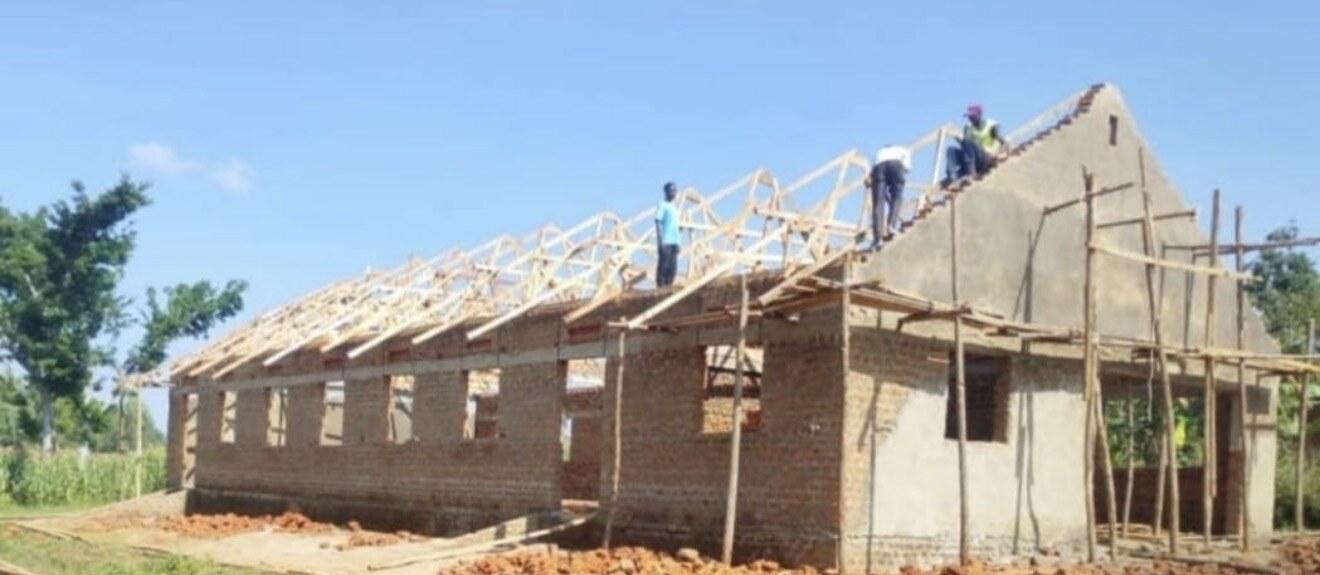
To market their harvest together, the farmers need a suitable place. That is why the cooperative building is so important.
Here the beans can be collected, weighed, checked and stored properly.
A good store protects the harvest from damp, pests and needless losses. It also makes it possible to keep larger quantities for longer.
The building is also meant to become a meeting place for the members, where decisions are made together and the cooperative's work is organised.
A successful cooperative needs not just storage space but trust, cooperation and transparent structures.
So we are not simply building a warehouse. We are laying the foundation for a stronger, self-reliant village community.
Deciding together – profiting together
A cooperative thrives when its members share responsibility.
The farmers are not just suppliers of their harvest but part of a community with shared economic goals.
Through member shares they can take part in the cooperative and, following its agreed rules, help make important decisions – such as when the beans are sold, which investments are needed and how any surplus is used.
Part of the profit can be paid out to the farmers. Other funds may be needed for running costs, upkeep of the building or developing the cooperative further.
Transparency is especially important. Every member should be able to see how much was brought in, what the sales earned and how the profit share is worked out.
That builds trust – and many individual small farmers become a strong community.
Helping people help themselves – for the long term
For many years our Freundeskreis has been committed to the people of Uganda, guided by one important idea:
We don't just want to help in the short term, but to create opportunities together with people so they can shape their own future.
A cooperative is a particularly good example. The farmers already bring everything their livelihood is built on: their fields, their labour, their knowledge and their harvest.
What they often lack are the economic structures to sell their produce on fairer terms. With the cooperative we want to close that gap.
We help people join together, market their harvests better and become more economically independent in the long run.
It's not about giving them something forever. It's about giving them the chance to achieve more by their own efforts.
An investment in the future of many families
At first glance, building a cooperative may seem like a fairly small project. But its effect can reach much further.
A farmer who earns more for his harvest can provide better for his family. A family that is better off can give its children better chances in education. And children who get a good education have better opportunities later to shape their own lives.
So selling beans better can, in the long run, bring about change that goes far beyond farming.
There are challenges, of course. Market prices can fluctuate, storage costs money and a cooperative has to be run responsibly.
But by acting together, organising well and making transparent decisions, the farmers can clearly improve their economic prospects.
Building a future together
For us, this project is another important step towards sustainable development in Uganda.
We want people no longer to be forced by financial need to sell their harvest cheaply while others later make the profits.
We want them to share in the success of their own work. For their families to benefit. For their children to have better prospects. And for more of the money earned to stay where the work is done: in their own village community.
For us, lasting help doesn't mean providing for people indefinitely. It means working with them to create the conditions for building a better future themselves.
So with this cooperative we are investing in more than walls, a roof and storerooms. We are investing in fair chances, economic independence, community and the future of many families.
Growing together. Storing together. Selling together. Profiting together.
Photos
Farming is the most important livelihood for many families around Butiru.